 English,
 Spanish,
 Polish,


Free Consultation
630-932-9100

-

- Home
- Our Firm
- Practice Areas
- Divorce
- Alimony and Maintenance
- Child Support
- College Expenses
- Special Needs Children and Divorce
- Parental Responsibility / Custody
- Sole Custody vs. Joint Custody
- Parenting Plans and Visitation
- Child Relocation
- Property and Asset Division
- Retirement, 401k Accounts and Pensions
- Debt Division
- Post Decree Modifications
- Post Decree Enforcement and Contempt Hearings
- Dissolution of Arranged Marriages
- Tax Consequences and Divorce
- Uncontested Divorce
- Divorce Involving Mental Health Issues or Addictions
- Divorce and the Stay-at-Home Parent
- Divorce FAQs
- Family Law
- Personal Injury
- Motor Vehicle Accidents
- Auto Accidents
- Truck Accidents
- Amazon Delivery Driver Accidents
- Motorcycle Accidents
- Rideshare Accidents
- Pedestrian Accidents
- E-Bike/E-Scooter Accidents
- Boat Accidents
- Aviation Accidents
- Premises Liability
- Medical Malpractice
- Nursing Home Abuse
- Wrongful Death
- Construction Site Accidents
- Other Serious Injuries
- Personal Injury FAQs
- Workers' Compensation
- Construction Accidents and Injuries
- Warehouse and Factory Worker Injuries
- Healthcare Worker Injuries
- Office Worker Injuries
- Shipping and Trucker Worker Injuries
- Types of Workers' Compensation Injuries
- Back and Neck injuries
- Repetitive Stress Injuries
- Arm and Shoulder Injuries
- Knee Injuries
- Occupational Diseases
- Specific Accident Cases
- Who We Represent
- Workers' Comp Death Benefits
- Filing a Workers' Comp Claim
- How to Qualify for Benefits Under Workers' Comp
- Vocational Rehabilitation Rights
- Workers' Compensation FAQs
- Criminal Defense
- Immigration
- Bankruptcy
- Estate Planning
- Real Estate
- Divorce
- Success Stories
- Testimonials
- Media
- Blog
- Contact Us
Recent Blog Posts
ICE at Work
 During the Obama years, the administration would most often try to combat the issue of unauthorized immigration by focusing on the abusive and exploitative employers that would hire undocumented immigrants and pay them less than U.S. citizens. The new administration appears poised to shift course, going as far as possibly re-instituting the dramatic workplace raids that were common during the presidency of George W. Bush. If this comes to pass, and your workplace is targeted, it can make an enormous difference for you to understand your rights—and to understand that everyone has certain rights, even the undocumented.
How Are Employers Punished?
The Obama administration focused on punishing employers for being willing to hire undocumented immigrants. This is, at least in some ways, eminently logical; if there are no opportunities for undocumented workers in the U.S., they will likely not come to seek them. However, the current penalties to employers, at least those assessed if an audit discovers discrepancies in employees’ work papers, are nowhere near stringent enough to warrant much of a reaction from the employers themselves.
Automated Car Accidents and the Future of Self-Driving Cars
 Automated, self-driving cars were supposed to be the wave of the future— technology that would decrease the number of car crashes that occur each year. Are they really the answer, though? Or do they have the potential to do more harm than good? Two recent accidents in Arizona, both of which involved automated cars, suggest there may be some major issues at hand.
A Look at the Accidents
The two vehicles—one a Tesla, the other an automated Uber—crashed in Arizona within the same week. The first incident, which occurred in Phoenix, involved the Tesla and an on-duty motorcycle officer. News sources indicate that the officer had been stopped at a light while exiting the highway. The Tesla stopped briefly, directly behind the officer, but then moved forward. The driver of the Tesla stated he had been using the vehicle in the autopilot mode, but authorities were not able to verify this. No one was injured in the crash, and the on-duty officer stated the crash was not severe enough to even warrant a report or investigation.
Divorce Basics – Examining the Major and Most Common Issues in Divorce
 Divorce can bring on a confusing mix of emotions and high levels of stress. Often, this is because couples are not certain of what to expect during the process. Rest assured that, although every divorce is unique, many contain similar aspects. Though complex and different in their application from one divorce to the next, understanding these major and common issues can help reduce the anxiety that you may be feeling and prepare you for the journey ahead.
Division of Marital Assets
Unless you and your spouse developed a comprehensive, well-planned prenuptial agreement, it is likely that you will need to go through the division of marital assets. Despite common misconception, this is not a 50-50 split in Illinois. Instead, Illinois is an equitable distribution state, which means you and your spouse will split your property, assets, and debts in a “fair” manner. What equitable means will vary from one couple to the next, and how each couple determines it will depend greatly on their situation.
The Negligent Hiring of Dangerous Truck Drivers
 Consistent safe driving practices is ideal. However, at the end of the day, the reality is that accidents do happen. Additionally, when accidents involve large trucks, the destruction and ensuing injuries can be catastrophic.
Many regulations are in place to promote safe driving by truckers on our roads. These regulations include limits on driving hours, maintenance requirements, and weight limits. One factor which can also contribute to a deadly truck accident is the negligent hiring of a dangerous driver by a trucking company.
If you or a loved one was involved in a serious truck accident and you suspect the driver was driving in a dangerous manner that contributed to the accident, retain the services of an experienced truck accident attorney. Your attorney will make an assessment of your rights and potential to recover monetary damages for your injuries and losses.
Obligations of Trucking Companies
Pitfalls in Safe Third Country Agreements
 Many countries around the world, including the United Kingdom and the United States, have become signatories to what are called safe third country agreements. These agreements essentially restrict asylum seekers in terms of when and where they may apply, which can sometimes have little effect on individual cases. However, they can sometimes cause significant problems, especially if an entire family wants to immigrate or pass through. In the current climate, knowing your options is imperative if you intend to apply for asylum in the United States.
Differences in Ports of Entry
The United States has a safe third country agreement with Canada, classified as a treaty and implemented in 2004. Under this agreement, refugees or anyone intending to make an asylum claim in one of the two countries must do so in the country they enter first. The crux of the matter, however, is that the agreement only applies to those who choose to make their claim when entering via a land border, and even then, there are exceptions to the rule. If someone drives or walks across the international border, and wishes to make a refugee claim, he or she will be barred from doing so unless the individual meets one of the four categories of exception.
Negotiating the Family Home in Divorce – Examining the Risks and Potential Pitfalls
 Of all the assets that a couple owns, the family home tends to be the most emotional to negotiate in divorce. It can also make up nearly half of the couple’s assets, depending on where they are in the mortgage and depreciation scale. As such, it is crucial that couples fully understand the risks and potential pitfalls associated with family home negotiations – especially if one party plans on keeping it. The following information may help.
Approach Negotiations with a Clear Head
The first thing to keep in mind is that divorce, though often an emotionally wrenching situation, is more like a business transaction, and it should be treated as such. This means, no matter how irritated or angry you might be with your spouse, you will need to come to the negotiations with a clear head. Avoid being petty, disengage from arguments, and consider letting your lawyer handle the bulk of the communications to minimize contact.
Proposed Federal Law and New Semi-Truck Technology to Reduce Speed and Crash-Related Deaths and Injuries
 Large, intimidating, and capable of wreaking complete havoc, semi-trucks are one of the most formidable vehicles on the road. Indeed, they are involved in thousands of crashes each year—98 percent of which result in at least one fatality. Yet, even the victims who survive often have life-altering complications, such as paralyzation, permanent brain damage, and burn injuries.
In hopes of reducing the frequency of semi-truck crashes and the impact they ultimately have on the lives of victims and their families, the National Highway Traffic Safety Administration and the Federal Motor Carrier Safety Administration recently teamed and proposed a new federal law.
Tech and Proposed Federal Law Would Limit Speed
One of the major contributing factors in semi crashes involve the speed at which the truck is traveling. Sometimes, it is simply that the truck is traveling too fast for road conditions. But speeding, in general, places the lives of other road users at risk. This is why the National Highway Traffic Safety Administration (NHTSA) and Federal Motor Carrier Safety Administration (FMCSA) recently proposed a federal law that would require all trucks over 26,000 pounds to have their speed limited by a technological device.
What to Do in an ICE Raid
 In recent days, several raids have taken place by the Immigration and Customs Enforcement (ICE), more specifically by Enforcement & Removal Operations (ERO). These raids were aimed at rounding up any and all undocumented immigrants, which is a departure from the policy of the previous administration.
Since the scale of these recent raids has been larger than usual, it has led to many finding themselves without counsel or without information about the rights they have in the United States. If ERO appears at your door, you may be too flustered to speak up then and there.
Before and During the Raid
It is pivotal to be prepared before any adverse event happens, by carrying the right information and by having steps in place in case the worst occurs.
Identification such as a driver’s license is a good item to have on you at all times. This form of documentation provides the information that you are required to give to law enforcement (your name and birthdate, in most states) without any identifying marker regarding your country of origin. Also, it can be helpful to ensure that your family has access to your relevant information and the contact information of an immigration advocate or group that you trust.
Green Card 101: A Primer for Lawful Permanent Residents
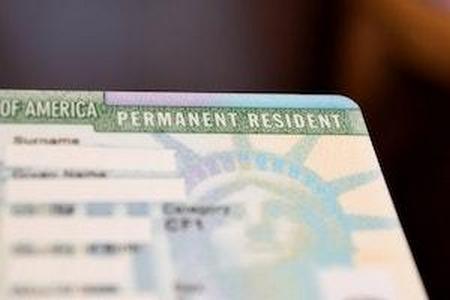 Immigration law is complex. As one navigates through the process of obtaining visas and more permanent status, it is not uncommon to become confused about one’s rights and responsibilities. Nowhere is this more fraught than if one is awarded a green card, which confers lawful permanent residence (referred to commonly as ‘LPR status’) on the holder. Upon being granted your green card, you are also granted rights under the law which cannot be taken away unless you lose your status.
More Than a Visa, Less Than Citizenship
Rather than relying on immigrant visas like H1Bs or F1s, LPR status is very often a kind of intermediate status for those who have reasons to live or work in the United States, but may not wish to renounce his or her original citizenship. It is also common to see LPRs who received their green cards via relief applications, such as those who apply each year under the Violence Against Women Act (VAWA). Either way, lawful permanent residents have rights and responsibilities that are enshrined in the law, and may not be taken away unless they are stripped of their green card. Many of these rights are things that citizens take for granted, but LPRs often do not have that luxury.
Unconventional Family Models After Divorce – Which Option is Right for You?
 As divorce becomes less stigmatized, and families grow more aware of the negative impact that family strife can have on children, more couples are opting for unconventional post-divorce family models. Some use birdnesting. Others choose a 50/50 split on the allocation of parenting responsibilities and parenting time. Still others have separate lives but continue to have family outings and vacations together. Which option is right for your family? The following may help you decide.
Live-In Parenting Models
Some parents get along well enough that they can use a live-in model after the divorce. This can range from all-out living together as a family, 24/7, to birdnesting – a model in which children stay in the family home but parents rotate in and out. How do you know if one of these options may be appropriate for your family?
First, families that have any form of live-in parenting should have an amicable situation. If spending time around your spouse or sharing space with them is simply too much to handle, then this model is unlikely to work for you. Further, live-in parenting models require a great deal of maturity on the part of both parties. You must be able to create and maintain clear boundaries while still focusing on the day-to-day lives of your children.








Offices in 3 Convenient DuPage County Locations
Lombard
900 E. Roosevelt Road
Lombard, IL 60148
Phone: 630-932-9100
Fax: 630-932-9868
MAP & DIRECTIONS
Bloomingdale
134 N. Bloomingdale Road
Bloomingdale, IL 60108
Phone: 630-529-2400
Fax: 630-529-7630
MAP & DIRECTIONS
Naperville
Phone: 630-420-1000
By Appointment Only

 Make a Payment


