 English,
 Spanish,
 Polish


Free Consultation
630-932-9100

-

- Home
- Our Firm
- Practice Areas
- Divorce
- Alimony and Maintenance
- Child Support
- College Expenses
- Special Needs Children and Divorce
- Parental Responsibility / Custody
- Sole Custody vs. Joint Custody
- Parenting Plans and Visitation
- Child Relocation
- Property and Asset Division
- Retirement, 401k Accounts and Pensions
- Debt Division
- Post Decree Modifications
- Post Decree Enforcement and Contempt Hearings
- Dissolution of Arranged Marriages
- Tax Consequences and Divorce
- Uncontested Divorce
- Divorce Involving Mental Health Issues or Addictions
- Divorce and the Stay-at-Home Parent
- Divorce FAQs
- Family Law
- Personal Injury
- Motor Vehicle Accidents
- Auto Accidents
- Truck Accidents
- Amazon Delivery Driver Accidents
- Motorcycle Accidents
- Rideshare Accidents
- Pedestrian Accidents
- E-Bike/E-Scooter Accidents
- Boat Accidents
- Aviation Accidents
- Premises Liability
- Medical Malpractice
- Nursing Home Abuse
- Wrongful Death
- Construction Site Accidents
- Other Serious Injuries
- Personal Injury FAQs
- Workers' Compensation
- Construction Accidents and Injuries
- Warehouse and Factory Worker Injuries
- Healthcare Worker Injuries
- Office Worker Injuries
- Shipping and Trucker Worker Injuries
- Types of Workers' Compensation Injuries
- Back and Neck injuries
- Repetitive Stress Injuries
- Arm and Shoulder Injuries
- Knee Injuries
- Occupational Diseases
- Specific Accident Cases
- Who We Represent
- Workers' Comp Death Benefits
- Filing a Workers' Comp Claim
- How to Qualify for Benefits Under Workers' Comp
- Vocational Rehabilitation Rights
- Workers' Compensation FAQs
- Criminal Defense
- Immigration
- Bankruptcy
- Estate Planning
- Real Estate
- Divorce
- Success Stories
- Testimonials
- Media
- Blog
- Contact Us
Recent Blog Posts
Still Locked Up: Post-Order Custody
 In a perfect world, a person who has come before an immigration judge has to wait very little time to move on with his or her life. However, given the United States’ extensive immigration court backlog and current culture of xenophobia, many immigrants who have been through the deportation and appeals processes still find themselves in legal limbo afterward, for reasons both appropriate and misguided.
Post-Order Custody
ICE used to be able to hold people indefinitely. However, in 2001, the Supreme Court decided the case of Zadvydas v. Davis, in which it was held that indefinite detention of (theoretically removable) aliens was impermissible in cases when the alien was not likely to be removed in the near future. In other words, if mere bureaucracy is holding up your departure, or a conflict that makes it temporarily unsafe to return to your home country, you are still permitted to be detained. If circumstances exist that mean your country will be unsafe or unreachable for the foreseeable future, you will be much more likely to receive a supervised release, or parole. While this decision only applied to admissible aliens, the court decided Clark v. Martinez three years later, extending the same standard to the undocumented.
Since Zadvydas was decided, the procedure underwent some modifications. Nowadays, after a final order has been entered in your case, Immigration & Customs Enforcement (ICE) has 90 days to remove you from the country. That period of time does not begin to run unless you have exhausted your appeals and there are no stays pending in your case. However, once it does begin to run, you must be removed during that 90 days. If you are not, you are entitled to a review of your detention.
If you are still in detention after the 90 days has elapsed, you are entitled to have your deportation officer conduct a review of your case. There are rare exceptions to this rule, namely if you have a communicable and dangerous disease or are a significant security risk, but otherwise, you are entitled to a review.
Am I Entitled to Review?
Not everyone is entitled to a review of their post-order status, but many are. In order to determine whether the Zadvydas or Martinez standards apply to you, you must fit the following criteria:
Pedestrian Deaths Continue to Rise on the Roads
 Pedestrians are one of the few commuter groups to face an increase in deaths over the past few years, as found by the National Highway Traffic Safety Administration. Despite efforts to improve safety, pedestrian traffic accident deaths have been increasing. In fact, there was a 6 percent increase in deaths from 2011 to 2012 alone. In 2013, 66,000 pedestrians were injured in traffic accidents and 4,735 pedestrians were killed. Not only is this a high number of fatalities, but also in 4,653 of these crashes, more than one pedestrian was killed. The NHTSA also found that across the country, on average, a pedestrian was killed every two hours and hurt every eight minutes. Unfortunately, pedestrian deaths account for 14 percent of all deaths in motor vehicle accidents. Pedestrians and Associated Risks As expected, pedestrians are often the ones who suffer the most in accidents involving impaired drivers. Forty-nine percent of fatal pedestrian accidents involved alcohol-impaired drivers or pedestrians. Pedestrians are also at a higher risk of dying in an accident between 6 p.m. and 8:59 p.m. Furthermore, already high-risk groups, such as young males and children, are also at a high risk of being killed in a pedestrian accident. For example, over two-thirds of pedestrians who died in a traffic accident were males and over 20 percent were children. To help combat the increasing number of pedestrian deaths, the U.S. Department of Transportation unveiled a new campaign to help communities combat the growing danger. In addition to providing a total of $2 million in pedestrian safety grants to cities with high rates of pedestrian deaths, the Federal Highway Safety Administration also created a one-stop shop for communities to access safety tips, resources, and programs focused on pedestrian safety. The site also includes proven safety countermeasures, child pedestrian safety reports, and curricula targeting parents, schools, children, and safety officials. Seek Help After an Accident The recent death of a Naperville man who was killed after being struck at the intersection of Western and Hickory is a reminder that pedestrian injuries and deaths will continue to be a danger as long as cities and towns focus on making transportation routes primarily motor-vehicle friendly. As public education on pedestrian safety increases, hopefully the number of pedestrian deaths will decrease. In the meantime, if you or a loved one is injured or killed in a traffic accident, please contact an experienced DuPage County personal injury attorney. At Mevorah & Giglio Law Offices, we can analyze the facts and help you receive the maximum amount of recovery for your injuries, pain and suffering, and medical costs. Please contact us today.
Federal Agency Releases Two New Impaired Driving Reports
 The National Highway Traffic Safety Administration released two new reports on impaired driving and motor vehicle accidents that surveys new trends and dangers on America's roads. The National Highway Traffic Safety Administration is an agency that is part of the U.S. Department of Transportation. It is responsible for the Federal Motor Vehicle Safety Standards, amongst other regulations and studies focused on driver behavior and motor vehicle safety. Numbers on Impaired Drivers NHTSA's latest update to its "National Roadside Survey of Alcohol and Drug Use by Drivers" found that while the number of alcohol-impaired drivers has decreased steadily there is a an increase in the number of drivers with drugs in their system. The survey was first conducted in 1973 and is completely voluntary and anonymous. Since the first report 40 years ago, there has been a steady decrease in alcohol-impaired drivers in every category covered by the report. In fact, there has been an 80 percent reduction in the percentage of alcohol-impaired drivers on weekend nights. Unsurprisingly there is a significant difference between the number of drivers who were found alcohol-positive in the daytime versus nighttime. However, the most significant trend found in the 2013-14 report was the increase in drivers with drugs in their system. This is includes over-the-counter drugs, prescription drugs, and illegal drugs. The number of weekend nighttime drivers with evidence of drugs in their system increased from 16.3 percent in 2007 to 20 percent in 2014. Also, the number of drivers with marijuana in their system jumped 50 percent. While the presence of drugs in a driver's system does not necessarily mean the driver is impaired it does raise serious safety questions, such as how can one accurately determine if drugs were the cause of an individual's impaired driving, how to conduct accurate field tests, and what drugs should be monitored in drivers. Because various drugs stay in the bloodstream days after they are consumed, it is often hard to determine how long an individual should wait after ingesting a particular drug – illegal or not. The NHTSA's second report focused on whether marijuana use by drivers is associated with a greater increase in crashes. The survey found that drivers using marijuana were more likely to be involved in accidents, but the data was unclear if it was because there was marijuana in their system or because marijuana users were more likely to be in broader groups that had a higher chance of being involved in a crash (i.e. young men, teenagers, etc). For example, young males are already a high-risk group and marijuana users who were young males were an even larger-risk group. Have You Been Injured? Impaired driving, regardless if it is due to drugs or alcohol, is a serious threat to pedestrians and other drivers. Unfortunately, it is hard for commuters to guard against this danger and avoid potentially fatal accidents. Enforcement of strict impaired driving laws and continued public education are the two methods found to be the most effective. However, if you or a loved one was hurt in an accident caused by a drunk or drug-impaired driver, please contact an experienced DuPage County accident attorney, such as those at Mevorah & Giglio Law Offices. We can help you receive the maximum compensation for your injuries. Please contact us today if you need help.
Criminal Charges for Immigration Violations
 There is much misinformation out in the media about the legal nature of immigration violations. Many believe that if someone is present in the U.S. without documentation, they are committing a crime. Technically, this is not so, aside from in very exceptional cases. Others wonder why it matters--the answer is because a criminal record is a very different matter than a record of civil infractions, for immigration purposes and otherwise. If you are in the U.S. without documentation, it is absolutely imperative that you know what manner of act you have actually committed.
Unlawful Presence
Unlawful presence is exactly what it sounds like - being present in the United States without benefit of legal status. However, lack of ‘legal status’ can be somewhat misleading to the average person, making it sound as though it is a crime, when in reality, unlawful presence is a civil infraction.
It is interesting to note that Congress actually had the opportunity in 2005 to criminalize unlawful presence, and declined to do so. The Sensenbrenner Immigration Bill, the short name for the Border Protection, Antiterrorism and Illegal Immigration Control Act of 2005, would have made unlawful presence a felony, regardless of circumstance, but after demonstrations around the nation, the Senate voted the bill down.
The only time mere unlawful presence (without any compounding actions) can result in criminal penalties is if it occurs after a person has been formally removed from the country, and then returns without leave to do so. If someone re-enters the U.S. when they have a previous standing removal order, they are at risk of being arrested and sentenced to prison. Most sentences are around two years, but it can vary. If you entered the United States legally, but are accruing unlawful presence, you will likely be subject to deportation, but you have not committed any crime under U.S. law (with very rare exceptions).
Unlawful Entry
Unlike merely being present unlawfully, entering the country without inspection is a federal crime, according to 8 U.S.C. §1325. It can be a felony, but is most often characterized as a misdemeanor punishable by fines and/or jail terms of no less than six months (but normally no more than two years).
One might wonder how someone can be unlawfully present in the U.S. and not have entered unlawfully, but it is in reality quite common. Many who find themselves in this position legally obtain visas and then simply fail to leave before the visa’s expiration date. They enter the country legally, with inspection, but as soon as their visa expires, they begin to accrue unlawful presence. In that scenario, the person would be guilty of a civil infraction, but no crime has been committed.
If you entered the United States without inspection, you are guilty of both the civil infraction of unlawful presence, and the crime of unlawful entry. You are subject to deportation, but you may also be subject to fines and a two-year jail sentence.
Get An Immigration Attorney On Your Side
If you need help with a potential immigration violation, or you need guidance on which penalties you may be subject to, having a good immigration attorney on your side can make all the difference. The skilled DuPage County immigration and deportation attorneys at Mevorah & Giglio Law Offices have years of experience in these cases, and will do our very best to help you with yours. Contact us today.
Supreme Court Considers Broadening Hearsay Exceptions to Child Testimony
 In the United States, defendants who have been accused of domestic abuse are provided with the benefits of the law, regardless of whether they are guilty or innocent. Most times, victims of domestic abuse are not able to easily prove that they have been the subject of abuse by their perpetrator, either because they are scared of the abusers, they love the abusers (regardless of the treatment that they are receiving), and/or there is very little evidence that could be shown to the police. It becomes a he-said, she-said situation, which our criminal justice system has a hard time assessing and evaluating.
Hearsay Evidence Rules
In court, when oral or written statements are brought in as evidence, the law of “hearsay” governs the admissibility of the statements. Hearsay is any out-of-court oral or written statement that is brought in to assert the truth of the matter that is at issue. Except for some outlined exceptions, hearsay is generally not admissible as truth, but could be brought in for another purpose, such as showing that the person had a bias or had received notice, regardless of whether the information held within the statement is true or not.
Budget Cuts to Illinois Courts Hurts Victims
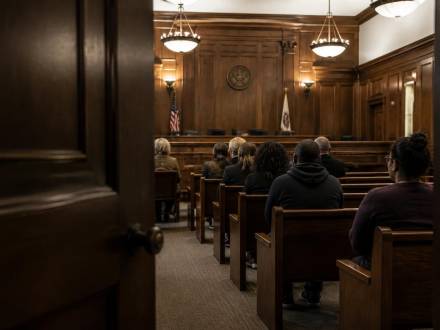 As the state of Illinois continues to reconcile budget shortfalls, the court system will suffer furloughs and layoffs. These administrative decisions will have negative ramifications on victims trying to have their day in court, even after the state Senate is able to vote in a fix. Currently there is a $17 million shortfall in the state's budget for Court Reporting Services. This will result in broad layoffs and furloughs throughout all of the circuit courts in the state. For example, this means two court reporters will be laid off from the Eighth Circuit alone and the rest will be furloughed to half of their normal schedule until the state legislators find a way to compensate for the deficit. Many courts have been operating on a furlough schedule for the past two weeks by working half their normal hours. Not only does this mean their pay is cut in half, but the number of cases heard is also greatly diminished. Recent Budget Approval The Illinois House and Senate, however, narrowly avoided this growing catastrophe by approving a budget fix on March 26th. The measure was approved by the senate 32-26 and was supported both by the governor and House democratic speaker. It addresses the overall budget shortfall of $1.6 billion with broad 2.25 percent cuts and sweeps to transfer $1.3 billion from other areas in the budget. Despite the last minute fix, it is impossible to ignore the steep human cost that comes with all of this budget jockeying. As the Chief Judge for the Fourteenth Circuit stated, "It's a crisis. It's a crisis to the system, it's a crisis to our court reporters. They are family and they have families." Furthermore, it is a crisis that affects many plaintiffs and their claims, because court reports are not only required to be present during felony cases but they are to be made available as often as possible for civil cases. The furloughs, layoffs, and delays will cause even further backlog in the court system, a fear that has been expressed by the judges themselves as the budget drama takes a toll not only on court employees and operational issues in the court, but on trials and pleas as well. In fact, even with just the two-week furlough prior to the vote, trial schedules have been set back for months. As Judge Daniel Shane said, "People who were to have had their day in court — their day of justice — were delayed for months because of two weeks of furloughs." Attorneys Are Here to Help In order for victims to have their day in court, the courts need to be fully operational. Furloughs and layoffs such as what happened during the month of March significantly harm the ability for plaintiffs to receive compensation for their injuries and costs. However, despite the delays and cutbacks to the court system, an attorney experienced with the state's system will know how to navigate the civil process and move your case as quickly as possible or who can bring the other side to the table to reach a financially beneficial settlement. If you have suffered any personal injury caused by an accident, do not despair. Instead, please contact an experienced DuPage County personal injury attorney at Mevorah & Giglio Law Offices. We can help you receive the maximum compensation for your injuries in a timely fashion. Please contact us today if you need help.
AAA's Latest Data on Teen Driving: A Scary Reminder for Other Drivers
 AAA's Foundation for Traffic Safety conducted a serious video analysis of car accidents involving teen drivers. The study found that distracted driving was a factor in six out of 10 moderate or serious accidents. This is significantly higher than the official estimates provided by the National Highway Traffic Safety Administration, which are gleaned from police reports. NHTSA found that distracted driving was a factor in 14 percent of accidents involving teen car accidents. AAA's Methods AAA instead had its researchers comb over 1,700 videos of crashes involving teen drivers and looked at what was happening in the car the six seconds prior to the accident occurring. These videos were taken by recorders in the cars. It was found that in 58 percent of the crashes, the teen drivers were distracted in those last six seconds prior to impact. This includes the almost 90 percent of accidents that involved the car driving off the road and 76 percent of rear-end accidents. As expected, technology plays a huge factor into what is distracting the teens prior to an accident. The video analysis found that 12 percent of teen drivers were using their cell phones prior to the accident and 15 percent were distracted by other passengers in the vehicle. Texting and calling occurred an average of 4.1 seconds prior to crash impact. Statistics like these serve to bolster legislation and state laws that restrict the number of passengers a teen driver may have in the car and cell phone use while driving. Illinois has the graduated driver license program which creates a tiered approach to driving privileges: fewer restrictions apply as the teen gets older. Under the current law, cell phone use while driving (and this includes hands-free devices) is prohibited for Illinois drivers under the age of 19. Texting while driving is also prohibited. Permit phase drivers (those 15 years old) may only have one passenger in the front, and backseat passengers cannot exceed the number of seat belts. During the initial licensing phase (16 – 17 years old), there can only be one other passenger under the age of 20 in the car, not including family. After having one's license for 12 months, this number increases to one passenger in the front and passengers up to the number of seat belts in the back. Passenger restrictions are removed once the teen moves into the full licensing phase (often between the age of 18 and 20). Have You Been Injured in a Wreck? The dangers young drivers pose on the roads is often beyond the control of other drivers. However, avoiding distractions and remaining vigilant is one such way you can keep safe. If you if you or a loved one was a pedestrian injured or killed in a traffic accident, please contact an experienced DuPage County car accident attorney. We at Mevorah & Giglio Law Offices can analyze the facts and help you receive the maximum amount of recovery for your injuries, pain and suffering, and medical costs. Please contact us today if you need help.
To Naturalize or Not?
 Becoming a naturalized U.S. citizen is a joyous feeling for most. It gives a sense of pride, safety and belonging. However, many come to realize that while naturalization means gaining several admirable qualities and protections, it also means giving things up. Some labor under a misapprehension that one can retain perks that they had under their previous nationality. Indeed, some find it better for their personal situation to retain their green card instead of naturalizing, or they may seek dual citizenship. You must figure out what is best for you.
Lawful Permanent Resident Status vs. Citizenship
Being a lawful permanent resident (LPR), or "green card" holder, means that you have the right to live and work in the United States, but you are not a citizen. There are several major differences between LPR status and citizenship.
- LPRs can petition for a select few relatives to join them in the United States (usually parents, spouses and minor children). Citizens may petition for many more relatives, and their closest (also usually parents, spouses and minor children) may be classified as ‘immediate’ relatives, as opposed to ‘preference’ relatives. This is important because ‘preference’ visa categories have a quota, and thus a waiting period, while immediate relatives may come as soon as their petitions are approved.
Transgender Rights in Family Law: Illinois Creates Right to Change Gender Markers on Important Legal Documents
 In June 2014, Illinois welcomed the expansion of its Marriage and Dissolution of Marriage Act by incorporating provisions that offer same-sex marriage benefits to same-sex couples. This has not only opened the door to same-sex couples but also to help transgendered citizens to be able to enter into marriage regardless of whether they transitioned before or after entering into marriage. The movement in favor of creating a space for transgendered individuals has moved throughout the country and Illinois has been no exception.
The Importance of the New Shift Toward Gender Marker Changes
In the last two years, Illinois has provided members of the transgender community the legal ability to change their gender markers on various legal documents, including their Illinois birth certificates, as well as their Illinois government IDs. Part of what makes the change in law so integral to the rights of the transgender population is that no longer will transgender people be required to go through genital surgery to be able to change the gender marker. This has been transformative to the transgender community as it provides those within the community the right to change their gender markers to the identities that they identify with more closely without having to go under the knife, especially since sexual reassignment surgery may not be an option or a desired outcome for many.
New Law Permits Gambling Facilities to Intercept Jackpot Winnings for Unpaid Child Support
 Illinois has a significant backlog of unpaid child support payments due to delinquent non-custodial parents avoiding their child support debt. In August of 2013, the state had almost $3 billion in unpaid child support debt, and was attempting to find ways to garnish payments from known delinquent parents. One of the programs that Illinois has established in the last few years has had great success: the wage garnishment program, which provided that employers of delinquent parents were required to garnish a certain percentage of the delinquent employee’s income to offset the payments due every month.
The Gaming Intercept Program
Illinois took the program one step further and created the Gaming Intercept program in 2013, a joint venture between the Illinois Gaming Board and Department of Healthcare and Family Services. The joint venture provided that the Illinois Gaming Board was able to intercept the jackpot winnings of noncustodial delinquent players and turn in the money to the Illinois Department of Healthcare and Family Services to pay back payments of child support.









Offices in 3 Convenient DuPage County Locations
Lombard
900 E. Roosevelt Road
Lombard, IL 60148
Phone: 630-932-9100
Fax: 630-932-9868
MAP & DIRECTIONS
Bloomingdale
134 N. Bloomingdale Road
Bloomingdale, IL 60108
Phone: 630-529-2400
Fax: 630-529-7630
MAP & DIRECTIONS
Naperville
Phone: 630-420-1000
By Appointment Only

 Make a Payment


