 English,
 Spanish,
 Polish


Free Consultation
630-932-9100

-

- Home
- Our Firm
- Practice Areas
- Divorce
- Alimony and Maintenance
- Child Support
- College Expenses
- Special Needs Children and Divorce
- Parental Responsibility / Custody
- Sole Custody vs. Joint Custody
- Parenting Plans and Visitation
- Child Relocation
- Property and Asset Division
- Retirement, 401k Accounts and Pensions
- Debt Division
- Post Decree Modifications
- Post Decree Enforcement and Contempt Hearings
- Dissolution of Arranged Marriages
- Tax Consequences and Divorce
- Uncontested Divorce
- Divorce Involving Mental Health Issues or Addictions
- Divorce and the Stay-at-Home Parent
- Divorce FAQs
- Family Law
- Personal Injury
- Motor Vehicle Accidents
- Auto Accidents
- Truck Accidents
- Amazon Delivery Driver Accidents
- Motorcycle Accidents
- Rideshare Accidents
- Pedestrian Accidents
- E-Bike/E-Scooter Accidents
- Boat Accidents
- Aviation Accidents
- Premises Liability
- Medical Malpractice
- Nursing Home Abuse
- Wrongful Death
- Construction Site Accidents
- Other Serious Injuries
- Personal Injury FAQs
- Workers' Compensation
- Construction Accidents and Injuries
- Warehouse and Factory Worker Injuries
- Healthcare Worker Injuries
- Office Worker Injuries
- Shipping and Trucker Worker Injuries
- Types of Workers' Compensation Injuries
- Back and Neck injuries
- Repetitive Stress Injuries
- Arm and Shoulder Injuries
- Knee Injuries
- Occupational Diseases
- Specific Accident Cases
- Who We Represent
- Workers' Comp Death Benefits
- Filing a Workers' Comp Claim
- How to Qualify for Benefits Under Workers' Comp
- Vocational Rehabilitation Rights
- Workers' Compensation FAQs
- Criminal Defense
- Immigration
- Bankruptcy
- Estate Planning
- Real Estate
- Divorce
- Success Stories
- Testimonials
- Media
- Blog
- Contact Us
Recent Blog Posts
Changes in H-1B Visa Rules Benefit Spouses
 For years now, skilled workers have been permitted to immigrate temporarily to the United States under an H-1B visa. While most employment visas permit the holder to take his or her spouse and children along, he or she has not been permitted to obtain employment (with rare exceptions). However, that may soon change, depending on conditional factors.
The H-1B Visa
H-1B visas are non-immigrant employment visas, granted for a term of six years. They are to be used to hire foreign workers when no qualified candidates are available in the United States. They are granted to those of ‘special ability,’ which is essentially the best and brightest.
A worker does not technically apply for an H-1B visa; rather, he or she accepts a job offer from a U.S. employer, who then petitions for the visa for that worker. To qualify, the worker must meet five major criteria:
Fiery Train Derailment in Illinois Continues to Raise Safety Concerns
 We have all seen the massive freight trains that pull hundreds of train cars across the country. Typically, this involves being stuck at a railroad crossing waiting for them to pass. However, these trains and their cargo pose a significant safety hazard about which most drivers and property owners are unaware. In some cases, these trains can cause catastrophic personal injuries. Train Derailments and Fires Derailments and fires involving trains carrying massive amounts of crude oil pose a danger to communities and drivers throughout the state of Illinois. In the recent past there have been serious oil train accidents in West Virginia, Ontario, and northern Illinois. In early March, in Galena Illinois, a BNSF Railway freight train loaded with crude oil derailed around lunch time. Twenty-one of the train's 105 cars fell off the tracks. The recovery efforts lasted for days, as the train was carrying 630,000 barrels of crude oil from North Dakota before it derailed. The derailment risked crude oil contaminating the Mississippi River, as it intersects with the Galena River not far from the accident site, as well as with the Upper Mississippi River Wildlife and Fish Refuge. Oil Transportation in Illinois Almost 500,000 shipments of oil were transported by train last year through the region—an astronomical jump from the 9,500 in 2008. The U.S. Department of Transportation estimates more than 200 crude oil and ethanol-carrying trains will derail over the next 20 years, with more than half of them likely to occur in urban areas. The success of the Bakken oil patch in North Dakota means even more trains will pass through Illinois and major population areas. This particular form of crude oil is highly combustible. This would be devastating to the public health, environment, infrastructure, property owners, and consumers. Trains derail and cause accidents for a variety of reasons, including weakened train cars, poor infrastructure and upkeep of railroad tracks, conductor fatigue and fast driving, and cars and pedestrians ignoring warning signs. Human error accounts for 38 percent of train accidents and historically human error has been the cause for the most fatal accidents. Sustaining Injuries in a Train Accident It seems far-fetched to think an oil train derailment can affect you or your loved ones, but it is not. In fact, there was such an incident in Quebec only a few years ago. The July 2013 catastrophe led to 47 deaths when a runaway crude oil train crashed into the city center. A recent West Virginia accident in February burned down a house, shot fire hundreds of feet into the air, contaminated the local water, and forced over 2,400 residents to evacuate. An accident in a major urban area is not a far-fetched idea. Major crude oil lines run past cities such as Philadelphia, Washington D.C., and Chicago. If you have been involved in an accident or have suffered personal injury or property damage due to a derailed train, please contact an experienced DuPage County personal injury attorney at Mevorah & Giglio Law Offices. We can walk you through the claims process to ensure you receive the maximum amount of recovery. Please contact us today if you need help.
Cook County Woman Dies from Pedestrian-Vehicle Accident
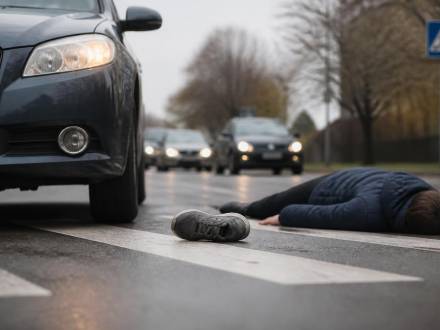 After being hit by a motor vehicle driver in Arlington Heights, a 58-year-old woman died from her injuries. A 16-year-old driver was responsible for the accident that occurred on Grove Street. The victim was walking her dog around in the morning near her Arlington Heights homes. Illinois Pedestrian Deaths According to a 2012 report, car crashes involving pedestrians in Illinois make up only 1.7 percent of the accidents across the state. However, more than 94 percent of the crashes are fatal to the pedestrian and more than 72 percent of the crashes result in an injured pedestrian. Moreover, in 2012, pedestrian deaths reached a high of 139. In 2013 vehicle-pedestrian accidents totaled 4,718 and resulted in 125 pedestrians killed and 4,419 pedestrians injured. While these numbers are relatively low, Illinois is one of the few states across the country that is facing an increase in motor vehicle crashes over the years. It is believed this is because more employees are commuting longer distances for work. This is especially true in the most populous areas in and around Chicago. Almost half of the total crashes statewide occurred in Cook County, and 130 pedestrians were killed in accidents. Excessive speed, alcohol, and distracted driving were the main causes of the accidents. Interstate Deaths Interstate crashes make up a significant portion of pedestrian-vehicle deaths across the country. AAA reported in its latest report in March that an average of 515 pedestrians were struck and killed by vehicles on interstates each year from 1993 to 2012. Interstate accidents accounted for 10 percent of pedestrian deaths. Midwestern states have been recorded to have the highest rates, including Illinois. Twice as many interstate pedestrian deaths occur in urban areas and occur on the weekend. Typically, pedestrians are hurt on the interstate when they are on the side of the road, usually exiting from their vehicle or tending to a downed vehicle. Why are pedestrian-vehicle accidents so dangerous? Most importantly, unlike cars and other motor vehicles, pedestrians have no outer protection, putting them at a much greater risk of sustaining serious injuries in an accident. Because of this, pedestrians should always take necessary precautions to decrease their chances of being struck by a vehicle. An Attorney Can Help You if You Have Been Injured Being involved in a pedestrian-vehicle accident can be devastating, and may result in catastrophic injuries or death. If you or a loved one has been hurt in a pedestrian-vehicle accident, you may be able to sue the driver for compensation for your injuries, medical bills, and other costs. Contact our experienced DuPage County pedestrian accident attorneys at Mevorah & Giglio Law Offices today to discuss your case.
An Overview of Asylum Hearings
 If you have applied for asylum or convention against torture (CAT) relief in the United States, the process to determine your eligibility for it can be complex and confusing. There are different levels of hearings, and there may be one, or there may be many. Before you begin the process in earnest, it may help to get an idea of what it is typically like.
The Master Calendar Hearing
The first experience many will have in the immigration system is the master calendar hearing. After receiving a notice to appear (NTA), you are scheduled for an initial hearing in front of a judge. A master calendar hearing is done to assess you and your case, but no legal determinations will be made right now. The judge will ask you questions, but mostly it is a chance to appear, to prove you are serious about obtaining legal status.
You will be called before a judge, usually by your Alien Registration Number (“A-number”) rather than your name. An interpreter will be provided if English is difficult for you—it is always best that you accept the help if you think you may need it, as a misinterpretation of the charges on the NTA can be a death blow to your chances at asylum if you give a wrong answer. Afterward, you will be required to admit or deny each charge on the NTA, and tell the judge what forms of relief you are seeking (asylum, voluntary departure, withholding of removal, CAT relief, et cetera).
The rest of the hearing typically has to do with scheduling. For example, if you need more time to prepare your evidence as to why you should be granted asylum, or if you do not yet have an attorney and want time to find one, you can ask for a continuance. Or, at times, some asylum applicants elect to have their case put on an expedited track, which means they must be ready within 180 days to present their case at an individual merits hearing.
The Individual Merits Hearing
Unlike the master calendar hearing, when you have an individual merits hearing, it is adversarial—in other words, you will be trying to argue your case (via your attorney) for why you should be granted relief, against a prosecutor who will try to argue that it should not be granted. You will present your story and your supporting witnesses’ stories and evidence in order to do this, and it is imperative that you know your story as well as you can. It is easy to confuse dates and names, but judges tend to be unforgiving if you do so; a simple mistake can sometimes appear to be made out of guilt. Generally, truthfulness and consistency are the traits you should be aiming to convey.
Very rarely, a Department of Homeland Security attorney who is prosecuting your case will stipulate as to certain points of your asylum claim (DHS is the parent agency of Immigration & Customs Enforcement). However, most of the time, you will have to present evidence on all your contentions. Witnesses and documents must be consistent, and even though an immigration judge is sometimes not the most patient or understanding person, you must not lose your temper.
At the end of the hearing, the judge will issue his or her verdict. You do have the right to appeal if you receive an unfavorable decision, but you may have to do so via your attorney and not in person, depending on your situation.
A Good Immigration Attorney Can Make The Difference
Going in front of the immigration court can be terrifying, and most people freely admit they need all the help they can get. The experienced Chicagoland immigration attorneys at Mevorah & Giglio Law Offices have been handling asylum claims for years, and know the ins and outs of the process. We will do our best to help you. Contact our offices today to discuss your options.
Corporal Punishment: The Thin Line between Child Discipline and Child Abuse
 The corporal punishment/child abuse debate was re-sparked in the last six months due to the widespread coverage one football player received with regards to injuries he perpetrated against his son while inflicting corporal punishment.The authorities found, however, that he had crossed the line, that he went beyond providing punishment to his child, but inflicted serious physical harm against him. The line drawn between corporal punishment and child abuse is a very thin one, and many states are reviewing their current laws to see whether it is possible to make the line more pronounced and more likely to protect the rights of children and the rights of parents to be free of government intervention in how to raise a family.
Protect Yourself Against UM/UIM Drivers
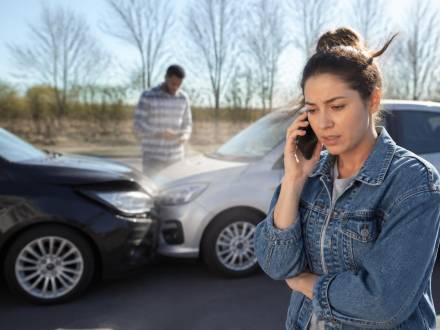 Driving with car insurance is nearly a second-nature habit for most car owners in the United States. There are, however, plenty of drivers who operate without car insurance or insufficient car insurance. They are known as uninsured or underinsured (UM/UIM) drivers. Being involved in a serious accident with one of these drivers can prove problematic because it makes recovering compensation from the at-fault driver extremely difficult. UM/UIM Drivers by the Numbers Studies have found that nearly 13 percent of drivers are uninsured or underinsured across the country. In some states this number is significantly higher or lower. For example, Mississippi has one of the highest rates at 26 percent and Massachusetts has one of the lowest at 4.5 percent. California, by sheer population size, has the highest number of uninsured drivers at 4.1 million. In order to protect oneself from uninsured/underinsured drivers, it is important to have UM/UIM insurance coverage. This is coverage included in your basic insurance policy that covers for incidents involving uninsured/underinsured drivers. In Illinois, drivers are required to carry liability insurance coverage that covers bodily injury, property damage, uninsured, and underinsured drivers. It is is one of 20 states that require drivers to have coverage for UM/UIM drivers and the insurance limits to match the insurance minimum for a basic insurance policy in the state. Illinois' financial responsibility limits are 25-50-20, which means Illinois drivers need coverage up to $50,000 for all persons injured in an accident, subject to a limit of $25,000 for one individual, and $20,000 coverage for property damage. This coverage amount represents the bare minimum required to operate a vehicle in Illinois and is not the recommended amount of coverage a driver should have to cover bodily injury, property damage, uninsured, and underinsured drivers. Uninsured/underinsured coverage is necessary; if you are involved in an accident with an underinsured or uninsured driver without such a policy, you may end up paying for all of your losses (injuries, medical costs, and damages to the car). The other option is to sue the driver even though they might not have the ability to recoup your losses. Contact an Car Accident Attorney for Help If you have been in a wreck, and you have UM/UIM insurance, it is important your insurance company steps up to the plate and handles your claim, since the other driver does not have the insurance capability to do so. Unfortunately, insurance companies are known to deny claims that involve accidents with uninsured/underinsured drivers. An experienced DuPage County car accident attorney can help walk you through the process and ensure you receive the compensation to which you are entitled from your insurance company, so please contact us today if you need help. At the Mevorah & Giglio Law Offices, we look forward to hearing from you.
Legislators Look to Add Motorcycle Safety to Drivers Ed
 To reduce the number of motorcycle accidents and fatalities, an Illinois lawmaker introduced legislation that would teach motorcycle safety in drivers' education classes. Introduced by Representative Thomas Bennett, H.B. 1410 incorporates motorcycle safety and motorcycle awareness to behind-the-wheel classes for students. The goal is to not only teach safety lessons to future motorcycle drivers but to also teach future automobile drivers how to share the road with motorcyclists. Motorcycle safety training, however, is not as strictly demanded as regular drivers' education and there are often limited incentives for drivers to take motorcycle safety classes. As of 2013, only three states required an insurance discount to be provided to those drivers who complete approved motorcycle training course. While such a course is required in most states to take a motorcycle safety course in order to receive a motorcycle license, there is little regulation requiring car drivers to understand how to drive around motorcycles. This is exceedingly problematic considering an increasing number of motorcycle crashes are caused by cars and distracted drivers. Causes of Motorcycle Crashes Driver awareness of motorcycles is important, as the biggest danger to motorcyclists is often other drivers. It has been found that the other vehicle causes more than 60 percent of motorcycle accidents. In 2013, 4,668 people died in motorcycle crashes and 88,000 were injured. Furthermore, motorcyclists were 26 times more likely than car occupants to die in an accident and five times as likely to be injured. Motorcyclists make up 14 percent of all traffic deaths and this does not include any passengers that may have also been on the bike. While motorcycle deaths have declined in recent years, the numbers are staggering considering there are only 8.5 million motorcyclists on the road compared to 210 million car drivers. By incorporating motorcycle safety into drivers education classes that young drivers take prior or near the time they get their license, a basic understanding and appreciation of other non-car motorists is established in the youngest and most vulnerable drivers. The long-term goal is to help reduce accidents involving motorcycles and accidents in general. Contact Our Experienced Accident Attorneys It is imperative to reach out to a legal professional if you have been hurt in a wreck. Our skilled DuPage County motorcycle accident attorneys are prepared to assist you in filing a claim and ensuring you recover proper compensation for your injuries. Contact Mevorah & Giglio Law Offices today for a consultation on your case.
Postnuptial Agreements: The Business of Going into Business with Your Spouse
 U.S. residents are known for being extremely entrepreneurial and innovative. Now, more than ever, the concept of start-ups and crowdfunding/sourcing are becoming increasingly popular as this allows for everyday people to take an idea and, with very little investment, turn it into a business venture with the opportunity for growth.
The well-known adage is that personal relationships and business never mix. But more and more, power couples are surfacing and becoming successful specifically because they are functioning as a marital unit. More likely than not, having your spouse be your business partner creates a situation where any profit or loss is shared with the person who you trust the most. As many couples who run profitable businesses will attest, it is all about communication, creating ground rules, and sometimes a postnuptial agreement for more complex decisions for the marriage and business.
What is a “Particular Social Group?”
 In the United States, those applying for asylum must qualify under the 1951 Geneva Convention definition of a refugee. This means that they must be able to prove a “well-founded fear” of returning to their home country because of their race, religion, nationality, political opinion, or membership in a particular social group (PSG). While four of these grounds are fairly straightforward, the ‘membership in a particular social group’ criteria is often used as a catch-all of sorts. Its definition remains disputed in U.S. law.
General Definition
Generally speaking, many judges define a particular social group as a group of people viewed as a threat by a government based on one characteristic they all share, usually an immutable (unchangeable) physical or mental trait or an experience. Examples in the past have included homosexuals, former gang members or people of a shared ethnicity. One trend that seems to help define the term further is that the characteristic shared must not be subjective. For example, “rich people” would be a poor attempt to define a particular social group, because “rich” is entirely subjective.
Another factor that many judges seem to consider is if the group is visible as a PSG within its own society. Victims of rape at the hands of soldiers may be a particular social group in the sense that they share a characteristic which is not transient or subjective, but they are often invisible in their home society. If a group is invisible in its home society, there is no real reason for them to fear persecution. In short, a particular social group is most likely to be recognized if it is comprised of people who share some kind of immutable characteristic (experience, ethnicity, sexual orientation, etc.), and if it is at least somewhat visible in the home country.
Application in the System
The U.S. immigration system has only just begun to give credence to many particular social groups that one might assume were already classified as such. However, many cases do not reach the courts or are not appealed to a court where a final ruling can be made. There remains a fair amount of debate as to what actually constitutes a PSG, and rulings have been inconsistent, but the definition is widening, which can be a salvation for some that would otherwise have found it difficult to gain asylum.
The most recent example is in September 2014, when a court ruled in Matter of A-R-C-G- that female survivors of domestic violence in Guatemala who were “unable to leave their relationships” constituted a PSG for asylum purposes. While the Board of Immigration Appeals made it clear that particular social group status would still be determined on a case by case basis, A-R-C-G- makes it easier for those in gender-based PSGs to qualify, provided there is enough governmental involvement (or lack of control over those involved) in their persecution.
Contact an Experienced Asylum Attorney
It is always a good idea to apply for asylum under as many grounds as you think are possible, but “particular social group” has always been a bit of a wild card. Even with trends now changing to be a little more clearly defined for the potential asylee, having competent representation is critical. The Chicagoland immigration attorneys at Mevorah & Giglio Law Offices are ready, willing, and able to put the benefit of their years of experience to work for you. Contact us today to discuss your options.
New Study Reveals the Dangers of Drowsy Driving
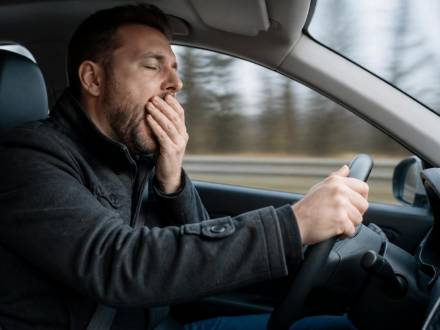 A new study by the American Automobile Association's (AAA) Foundation for Traffic Safety reveals that the dangers of drowsy driving are higher than originally reported, and may lead to accidents. AAA's Foundation for Traffic Safety's Annual Traffic Safety Culture Index found that more than one-third of drivers admit to having fallen asleep while behind the wheel in the past year. Even more disturbing is the report's discovery that an estimated 21 percent of fatal crashes and 6 percent of all crashes involve drowsy drivers. This is significantly higher than the official government statistics by the National Highway Traffic Safety Administration, which found that drowsy driving causes approximately 1.4 percent of all crashes, 2.2 percent of crashes that cause an injury, and 2.5 percent of fatal crashes from 2005 to 2009. In fact, the report found that drowsy driving has been an increasing cause of motor vehicle accidents over the years. In a previous version of the study, it was found that 17 percent of fatal crashes from 1999 to 2008 involved drowsy drivers, whereas the updated numbers from 2009 to 2013 found that 21 percent of fatal accidents involved a drowsy driver. Furthermore, the report found that drowsy drivers were involved in 6 percent of all crashes, 7 percent of crashes that resulted in an injury, and 13 percent of those that resulted in a trip to the hospital. This means that an average of 328,000 motor vehicle crashes every year involve a drowsy driver: 109,000 of these accidents resulted in someone getting hurt and 6,400 in someone getting killed. Difficulties with Drowsy Driving These numbers are startling but should also be viewed with some trepidation. It is hard to define exactly what constitutes drowsy driving for the purposes of accurate reporting. Often drivers do not fully remember or realize that they were drowsy, fatigued, and/or falling asleep. It has also been found that drivers are more willing to admit they were falling asleep at the wheel rather causing an accident for other reasons, such as distracted driving (i.e. texting). However this does not mean the study's results, which show that 21 percent of fatal accidents are caused by drowsy driving, are in fact too outrageous. A substantial number of car crashes were excluded from the report's analysis due to missing data on the severity of the accidents' injuries—a requirement for this particular report by the AAA. Contact Our Experienced Car Accident Attorneys If you are in an accident, contact one of our experienced DuPage County car accident attorneys. We will investigate the circumstances to discover if the other driver was drowsy at the time of the accident. Reach out to the Mevorah & Giglio Law Offices for a consultation.








Offices in 3 Convenient DuPage County Locations
Lombard
900 E. Roosevelt Road
Lombard, IL 60148
Phone: 630-932-9100
Fax: 630-932-9868
MAP & DIRECTIONS
Bloomingdale
134 N. Bloomingdale Road
Bloomingdale, IL 60108
Phone: 630-529-2400
Fax: 630-529-7630
MAP & DIRECTIONS
Naperville
Phone: 630-420-1000
By Appointment Only

 Make a Payment


